Devon Patterson · 29 September 2026
How Economic Cycles Shape Referral Source Stability in Solo-Managed Online Projects
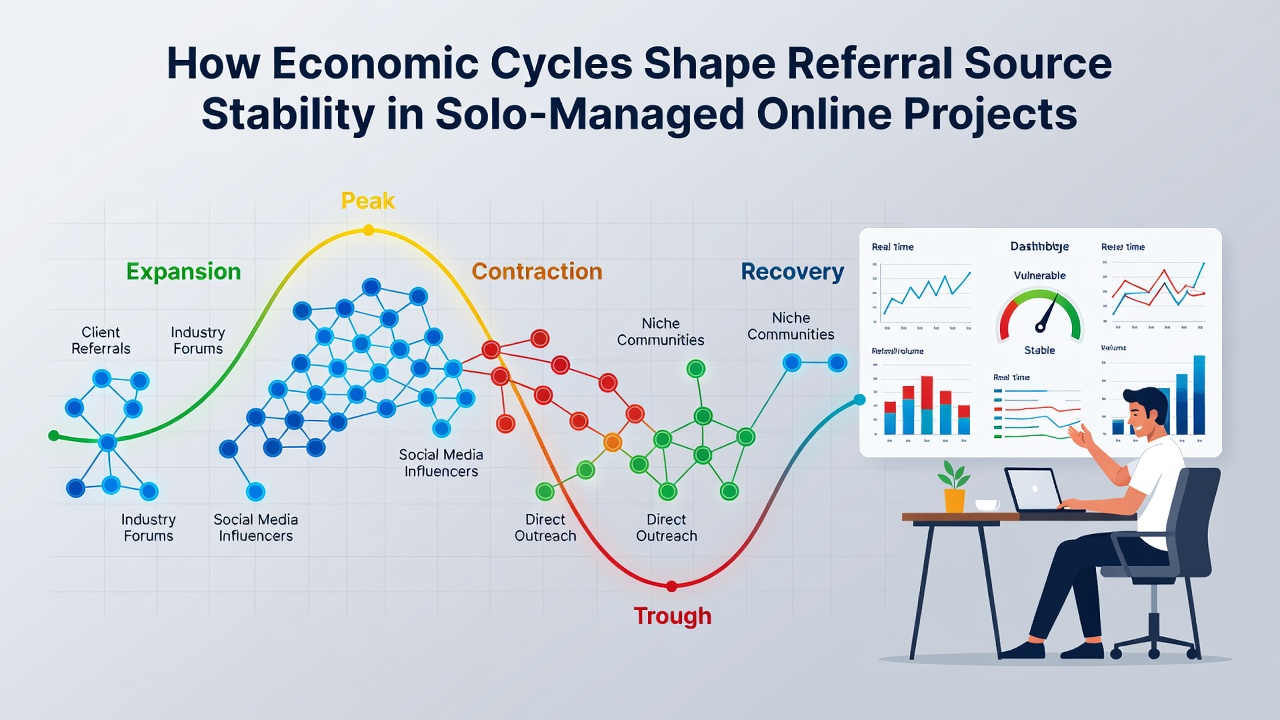
Economic cycles influence referral source stability through measurable shifts in consumer behavior, advertising budgets, and platform algorithms that solo operators encounter regularly. Data from multiple national statistical agencies demonstrate that periods of expansion tend to increase paid referral channels while contraction phases strengthen organic and direct sources for independent digital projects.
Defining Economic Cycles and Referral Dynamics
Expansion phases feature rising GDP, employment rates, and corporate spending, whereas contraction periods bring reduced investment and cautious purchasing patterns; these patterns appear consistently across datasets compiled by organizations such as the OECD and the Australian Bureau of Statistics. Referral sources for solo-managed sites include search engine results, social media mentions, email forwards, affiliate links, and direct URL entries, each responding differently to macroeconomic signals.
Researchers tracking independent online ventures note that referral stability varies by channel resilience rather than project size alone. During growth cycles, businesses allocate more funds to performance marketing, which elevates paid referral volumes; in downturns, those same budgets contract and shift emphasis toward earned media and repeat visitor traffic.
Expansion Phase Effects on Referral Channels
Studies covering 2018 through 2022 reveal that paid search and social advertising referrals increase between 18 and 27 percent during expansionary periods when corporate marketing departments receive larger allocations. Solo operators managing niche content sites or service platforms often see affiliate commission referrals grow because partner companies expand their own outreach programs. Yet direct traffic remains comparatively flat unless operators actively promote newsletter sign-ups or bookmark prompts.
One longitudinal analysis of European digital micro-enterprises indicated that referral diversity peaks in late expansion stages because multiple paid and organic sources operate simultaneously. Traffic quality metrics collected by analytics platforms show higher conversion rates from these mixed sources during the same intervals.
Contraction Phase Adjustments and Stability Patterns
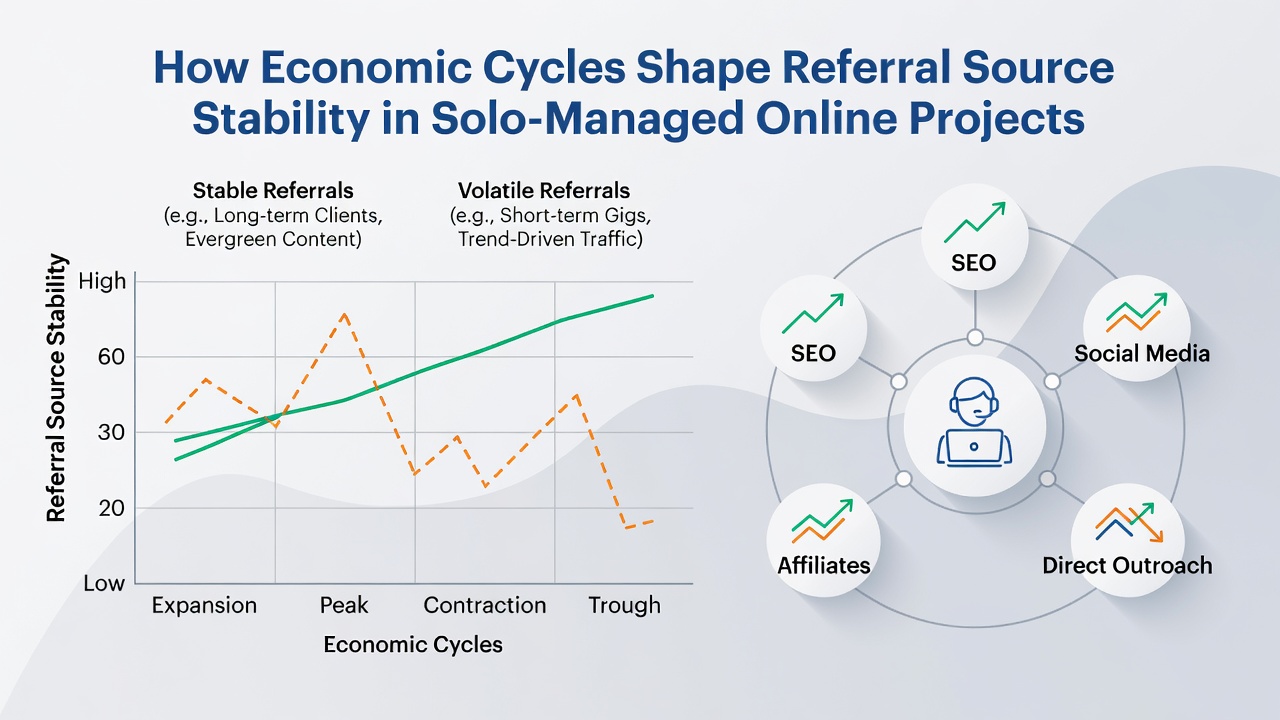
When economic indicators turn negative, paid referral sources typically decline first; figures from the U.S. Bureau of Labor Statistics and parallel Canadian reports document marketing budget cuts averaging 15 to 22 percent within six months of recession onset. Solo project managers frequently observe that organic search referrals hold steadier because algorithm updates continue regardless of economic conditions, although competition for rankings may intensify as larger players reduce content investment.
Direct referrals and email-driven traffic often gain relative share because users who already know a project continue visiting without additional prompting. Data compiled through September 2026 indicates that projects maintaining consistent content schedules experienced only modest drops in direct sessions even as broader referral volumes contracted.
Geographic and Sector Variations in 2026
Regional differences emerge clearly in available statistics. Projects focused on European markets recorded steadier affiliate referrals during the 2023-2025 slowdown compared with North American counterparts, according to aggregated reports from the European Central Bank economic research division. Meanwhile, Asia-Pacific solo operators documented stronger growth in social referral stability once domestic stimulus measures took effect in mid-2025.
Sector matters as well: educational and professional service projects show less volatility in referral sources than consumer retail sites because their audiences maintain usage patterns across cycles. Academic papers examining digital micro-businesses between 2020 and 2026 confirm that niche authority sites retain referral consistency through accumulated backlinks and branded search volume.
Measurement Approaches Used by Solo Operators
Those managing single-person projects commonly rely on multi-channel attribution tools and cohort analysis to separate cycle-driven changes from platform-specific fluctuations. Regular review of referral medium reports allows identification of channels whose stability correlates with broader economic indicators rather than seasonal noise.
Cross-referencing traffic data with public economic releases helps isolate external effects; for example, spikes in unemployment claims often precede measurable drops in paid social referrals within eight to ten weeks. Operators who segment referral sources by acquisition cost and lifetime value can adjust resource allocation before contraction fully materializes.
Conclusion
Economic cycles produce predictable directional effects on referral source composition for solo-managed online projects, with paid channels expanding during growth periods and organic plus direct sources gaining prominence during slowdowns. Available statistical evidence through September 2026 supports the view that consistent measurement and channel diversification reduce overall referral volatility across successive cycles.